Fall Home Maintenance Checklist for Indianapolis Homeowners

Fall is the right time to prepare your home for colder temperatures, wind, snow, ice, and freeze-thaw cycles. A simple inspection can help you identify visible issues before they become more difficult to address during winter.
This fall home maintenance checklist for Indianapolis homeowners covers the main areas of a home, including roofing, gutters, masonry, windows, drainage, insulation, plumbing, and safety systems. Use it for your home in Indianapolis, Carmel, or the Greater Indianapolis Metropolitan Area.
Start With Safety
Do not climb onto your roof or use an extension ladder unless you are trained, properly equipped, and comfortable with the risks. Roofs may be slippery, steep, or weakened by storm damage.
From the ground, homeowners can safely look for:
- Missing or visibly damaged shingles
- Sagging or overflowing gutters
- Loose siding or trim
- Cracked masonry
- Damaged window screens
- Gaps around doors and windows
- Standing water near the foundation
- Broken branches near the roof
Hire a qualified professional for roof access, steep roofs, chimney inspection, high gutters, attic concerns, structural damage, or any repair that feels unsafe.
1. Inspect the Roof and Roof Flashing
Roof maintenance is one of the most important parts of preparing for winter in Indiana. Wind, hail, heavy rain, and falling branches can affect shingles and flashing.
From the ground, check for:
- Missing, cracked, curled, or lifted shingles
- Dark areas or visible wear
- Loose metal around roof edges
- Damaged vents or pipe boots
- Flashing that appears lifted or separated
- Signs of roof debris or fallen branches
Pay special attention to flashing around:
- Chimneys
- Plumbing vents
- Valleys
- Skylights
- Dormers
- Roof-to-wall transitions
Flashing helps direct water away from vulnerable areas. Damaged flashing may allow water to enter even when shingles appear intact.
If you notice ceiling stains, damp insulation, musty odors, or water marks in the attic, schedule a professional inspection. Do not wait for a winter leak to become visible indoors.

2. Clean Gutters and Check Downspouts
Gutters and downspouts should be cleaned before and after most leaves have fallen. In Central Indiana, late October through mid-November is often an important window for a final fall cleaning.
Check that:
- Gutters are free of leaves and packed debris
- Gutters are securely attached
- Downspouts are connected
- Water flows through the system
- Downspout extensions direct water away from the foundation
- Water is not pooling beside the home
- Gutter seams are not leaking
Never stand on an unstable ladder or climb onto a roof to clean gutters. If the gutters are high, the roof is steep, or access is difficult, contact a qualified professional.
Clogged gutters can contribute to water intrusion, wet crawlspaces, foundation concerns, and ice buildup during freezing weather.
3. Review Siding, Masonry, Windows, and Doors
The exterior of your home protects the interior from wind and moisture. Walk around the property and inspect the siding, brick, stone, windows, and doors.
Look for:
- Loose, cracked, or missing siding
- Open seams around trim
- Peeling or damaged exterior paint
- Cracked brick or stone
- Deteriorated mortar joints
- Gaps around windows and doors
- Failed caulk around exterior openings
- Damaged screens or storm windows
- Doors that do not close tightly
Small masonry cracks and deteriorated mortar should be evaluated before repeated freeze-thaw cycles. Water can enter small openings, freeze, expand, and place additional stress on brick, stone, and concrete.
Check weatherstripping around exterior doors. Replace worn sections where you can feel drafts. Re-caulk visible gaps around window trim, door casings, dryer vents, and other exterior penetrations.
For larger masonry, window, siding, or door concerns, Thomas Restoration masonry services, impact window installation, and exterior improvement services can help you plan the next step.
4. Check the Foundation and Drainage
Walk around the foundation after rainfall. Look for:
- Standing water near the home
- Soil that slopes toward the foundation
- New or widening cracks
- Damp basement walls
- Efflorescence or white residue on masonry
- Overflowing downspouts
- Erosion near corners or downspout outlets
Downspouts should discharge water away from the foundation and toward an appropriate drainage area. Do not direct water toward a neighboring property, walkway, or basement window.
Contact a qualified professional if you see significant foundation movement, recurring water intrusion, structural cracks, or drainage problems that you cannot correct safely.
5. Inspect Attic Ventilation and Moisture
Attic ventilation and insulation affect comfort, energy use, and roof performance. From a safe location, look for:
- Damp insulation
- Water stains on roof decking
- Mold-like growth
- Condensation around vents
- Blocked soffit vents
- Inadequate insulation
- Bathroom or kitchen exhaust ducts that terminate in the attic
Bathroom and kitchen exhaust fans should vent outdoors, not into the attic. Poor ventilation can allow moisture to collect during the heating season.
If the attic is difficult to access or you see moisture damage, have a qualified professional evaluate it. Do not step between attic joists or walk on unsupported ceiling surfaces.

6. Service the HVAC System and Review Insulation
Schedule a professional furnace inspection before regular heating begins. A qualified HVAC technician can review system operation, safety controls, airflow, and other components.
Homeowners can:
- Replace the furnace filter
- Vacuum accessible supply and return vents
- Keep vents open and unobstructed
- Check visible ductwork for damage
- Confirm the thermostat is working
- Make sure exterior HVAC equipment is clear of leaves and debris
Replace filters according to the manufacturer’s directions. Homes with pets, construction dust, or higher occupancy may require more frequent replacement.
Review insulation in the attic, crawlspace, basement, and exterior walls when accessible. Air leaks around windows, doors, plumbing penetrations, and electrical openings may make rooms harder to heat.
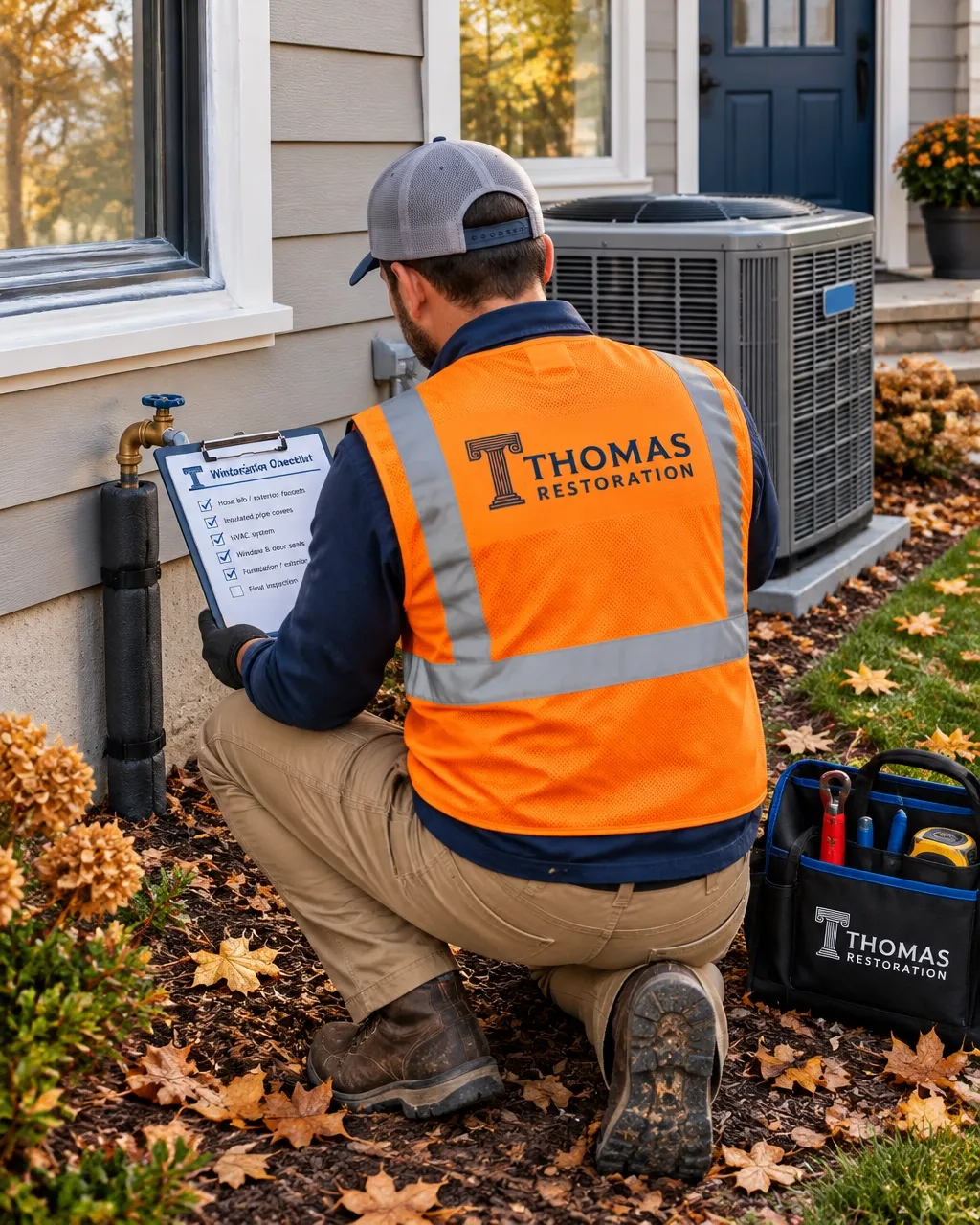
7. Winterize Plumbing and Outdoor Faucets
Freezing temperatures can damage exterior water lines and exposed plumbing. Before the first hard freeze:
- Disconnect garden hoses
- Store hoses in a protected location
- Shut off interior valves to outdoor faucets
- Open exterior faucets to drain remaining water
- Install insulated faucet covers where appropriate
- Insulate exposed pipes in garages and crawlspaces
- Winterize irrigation systems according to the manufacturer’s instructions
If you are unsure where the interior shutoff is located, ask a qualified plumber for help. Do not force a stuck valve.
If you will be away from home during winter, maintain adequate indoor heat and consider having someone check the property regularly.
8. Test Smoke and Carbon Monoxide Detectors
Fall is a good time to test every smoke and carbon monoxide detector.
Complete these steps:
- Press the test button on each unit
- Replace batteries when needed
- Confirm alarms are installed on each level
- Check the manufacture date
- Replace alarms according to the manufacturer’s schedule
- Keep detectors free of dust and paint
- Confirm everyone in the home knows the evacuation plan
Carbon monoxide alarms are especially important during the heating season. Never ignore an alarm. Leave the home and contact emergency services if an alarm sounds.
9. Prepare for Winter Safety
Before snow and ice arrive, check:
- Exterior handrails
- Porch and deck steps
- Walkway lighting
- Sidewalk and driveway surfaces
- Snow shovels
- Ice melt or salt
- Outdoor extension cords
- Dead branches near the home
- Tree limbs over the roof
- Emergency contact information
Trim or remove hazardous branches before winter storms. Use qualified tree professionals for large, unstable, or elevated branches.
10. Document Storm Damage Before Winter
If your home experienced wind, hail, or storm damage, document it promptly. Take clear photos and videos from safe locations. Include the roofline, siding, gutters, windows, doors, masonry, interior ceilings, attic areas, and any visible water intrusion.
Keep:
- Photos and videos
- Inspection reports
- Contractor estimates
- Repair invoices
- Receipts
- Communication with contractors
- Communication with your insurer
Contact your insurance company promptly after storm damage and follow its documentation and claim instructions. Do not assume that damage is covered or that a claim will be approved. Thomas Restoration can help identify visible exterior concerns and provide restoration services when appropriate.
Printable Fall Home Maintenance Checklist
Roof and Exterior
- Check shingles from the ground
- Look at flashing around chimneys, vents, and valleys
- Inspect gutters and downspouts
- Direct downspouts away from the foundation
- Check siding, brick, stone, and mortar
- Inspect windows, doors, trim, and exterior caulk
- Look for foundation cracks or standing water
- Trim branches away from the roof and home
Attic, HVAC, and Interior
- Look for attic moisture or water stains
- Check visible insulation and ventilation
- Schedule a furnace inspection
- Replace the HVAC filter
- Check weatherstripping around doors and windows
- Test smoke and carbon monoxide alarms
- Clean the dryer vent and exterior vent hood
Plumbing and Winter Safety
- Disconnect and store garden hoses
- Shut off and drain outdoor faucets
- Insulate exposed plumbing
- Winterize irrigation systems
- Check handrails and exterior lighting
- Stock snow and ice supplies
- Document storm damage
- Contact your insurer promptly when needed
Get Your Home Ready for Indiana Winter
A seasonal inspection can help you identify maintenance needs before freezing temperatures arrive. For roofing, siding, masonry, windows, doors, and other exterior concerns, contact Thomas Restoration LLC.
Thomas Restoration LLC is licensed, insured, and bonded in Indiana. Financing is available, and the company provides a 100% satisfaction guarantee.
Request a consultation today:
Thomas Restoration LLC
303 Congressional Blvd.
Carmel, IN 46032
Call: (317) 410-8153 or (317) 749-0770
Website: thomasrestorationllc.com
Explore roofing services, masonry services, and additional home improvement services for your Indianapolis-area property.